
Choosing the right hardwood flooring is one of the most important decisions when building or remodeling a home. Hardwood floors add warmth, elegance, and long-term value to any space — but not all hardwood floors are the same.
Two of the most popular options on the market today are solid hardwood floors and engineered hardwood floors. While they may look similar on the surface, they differ significantly in structure, performance, durability, and ideal use cases.
In this article, we’ll break down the key differences between solid and engineered hardwood flooring so you can make an informed decision for your home.
What Is Solid Hardwood Flooring?
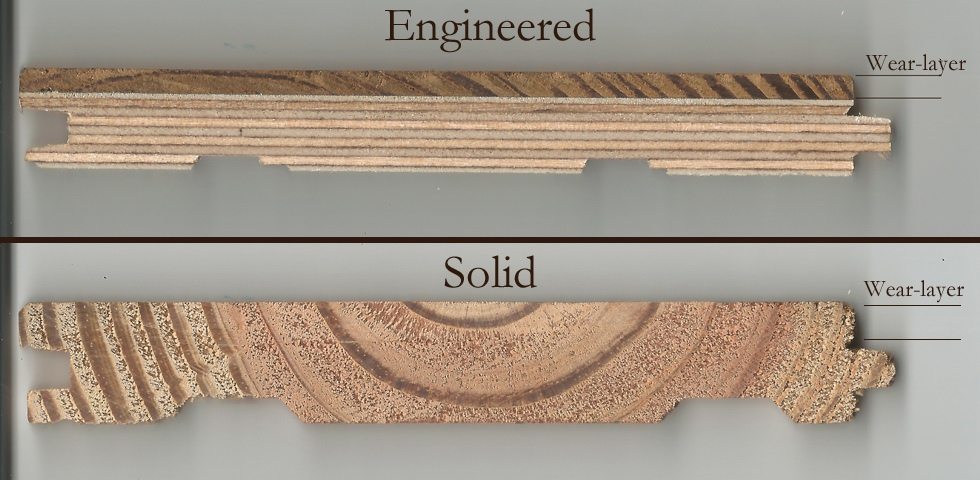
Solid hardwood flooring is made from 100% natural wood, cut from a single piece of timber. Each plank is solid throughout its entire thickness, which is why this type of flooring has been used for centuries.
Because it is made entirely of real wood, solid hardwood offers a timeless and authentic appearance that many homeowners value.
Key characteristics of solid hardwood floors:
- Made from one solid piece of wood
- Available in various wood species (oak, maple, walnut, etc.)
- Can be sanded and refinished multiple times
- Extremely long lifespan when properly maintained
Advantages of solid hardwood flooring:
- Natural, authentic wood look
- Can last for generations
- Can be refinished several times to restore its appearance
Limitations of solid hardwood flooring:
- Sensitive to moisture and humidity
- Can expand or contract with temperature changes
- Not recommended for basements or concrete slabs
- Requires specific installation conditions
Solid hardwood floors are ideal for above-grade areas, such as living rooms, bedrooms, and hallways, where humidity levels are controlled.
What Is Engineered Hardwood Flooring?
Engineered hardwood flooring is designed using a multi-layer construction. It features a real hardwood top layer (also known as the wear layer) bonded to multiple layers of high-quality plywood or fiberboard underneath.
This layered structure provides increased stability, making engineered hardwood a versatile and modern flooring solution.
Key characteristics of engineered hardwood floors:
- Real hardwood surface layer
- Multiple layers beneath for structural stability
- Designed to handle moisture and temperature changes better
Advantages of engineered hardwood flooring:
- More resistant to moisture and humidity
- Suitable for installation over concrete slabs
- Works well in basements, condos, and modern homes
- Greater dimensional stability
Limitations of engineered hardwood flooring:
- Refinishing depends on the thickness of the wear layer
- Typically fewer refinishing opportunities than solid hardwood
Thanks to its construction, engineered hardwood is an excellent choice for spaces where solid hardwood may not perform as well.
Solid vs. Engineered Hardwood: Key Differences
While both flooring options offer beauty and durability, their differences lie beneath the surface.
Solid Hardwood Flooring
- Single-piece natural wood construction
- Can be refinished many times
- Less resistant to moisture
- Best for dry, above-grade areas
Engineered Hardwood Flooring
- Multi-layer construction with real wood top layer
- Greater resistance to moisture and temperature changes
- Suitable for a wider range of installations
- Limited refinishing depending on wear layer thickness
Visually, both options can look nearly identical once installed. The true difference is in performance, stability, and application.
